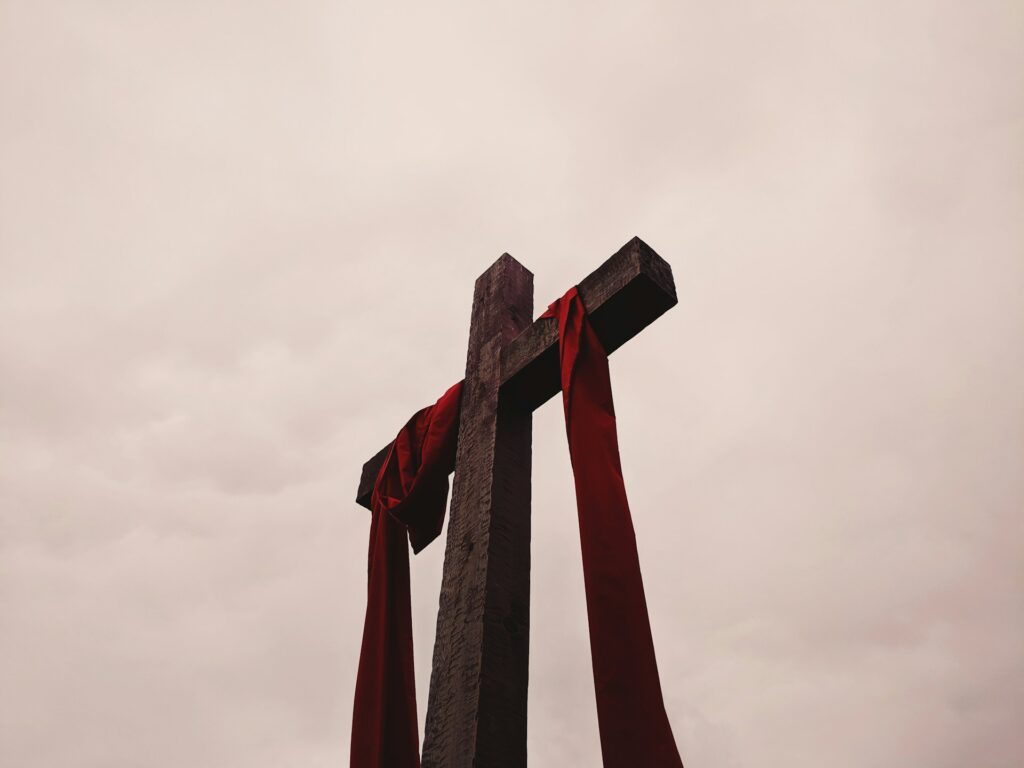
2020 and 2021 were years of great uncertainty due to Covid-19, and we could add the social and political crisis we experienced in Bolivia at the end of 2019. What has sustained us through these crises? And what continues to sustain us amidst daily difficulties like job loss, family and interpersonal issues, and various other problems? How can Christians manage to navigate times of difficulty and suffering? The answer is: through the reality of Jesus’ resurrection.
The resurrection of Jesus offers us Power to live the Christian life, not through our own easily exhausted strength, but sustained by the same Power that raised Jesus from the dead. Additionally, Jesus’ resurrection offers us hope that assures us of the future glory awaiting those of us who have faith in Jesus. Let’s read 1 Corinthians 15:17-19:
17 And if Christ has not been raised, your faith is futile; you are still in your sins. 18 Then those also who have fallen asleep in Christ are lost. 19 If only for this life we have hope in Christ, we are of all people most to be pitied.
These words were written by the Apostle Paul. He planted the church in Corinth and spent a year and a half there teaching the Word (Acts 18:1-11). But after he left, a series of problems began. In this letter, he tries to correct these issues by helping the Corinthians apply the Gospel of Jesus to every area where they were having difficulties. Among all the issues Paul wants to address (divisions, sexual immorality, disagreements about food, disorder in church meetings), he also talks about the resurrection of Jesus. Apparently, there were people in the Corinthian church who did not believe in the resurrection of the dead. This was a significant problem because if the dead do not rise, then Jesus did not rise either, and if Jesus did not rise, Christianity falls apart, and not only that, all of humanity loses hope. But the reality of Jesus’ resurrection offers us:
- Power (to live the Christian life)
- Hope (for a glorious future)
So, let’s look at each of these things. First, the reality of the resurrection offers us Power:
Power
Verse 17 says: “And if Christ has not been raised, your faith is futile; you are still in your sins.”
“Futile” refers to something that is useless, meaning something that will not yield results. It’s like trying to drive a car without gas; it won’t go anywhere, no matter how hard you step on the gas pedal. Doing so is futile, and it won’t result in anything. Faith without the reality of the resurrection is also futile.
What if we said something like this: “I believe in Christianity, I believe its values are good for society: love for one another, humility, but the stories in the Bible are fantastic, we can’t consider them as true events. For example, the resurrection. In this age of science, believing that Jesus rose from the dead is unacceptable; the resurrection is just a myth, but it has a nice lesson for us.”
The problem with this way of thinking is that it tries to live a Christian life separated from the source of power to live that Christian life. The resurrection of Jesus is the source of power for the Christian, because the Bible teaches that the same power that raised Jesus from the dead is also at work in the lives of Christians (Ephesians 1:18-20). This power caused us to be born again, this power helps us in daily life, this power transforms us, and this power gives us victory in the struggle with sin. But if the resurrection of Jesus never happened, if it is just a myth, then that power does not exist, and even if we have faith that we can be better, we lack the power to achieve it.
But someone might say: “But look at how much humanity has advanced, how much we have progressed and achieved through our own strength.” Yes, humanity has advanced greatly in technology and knowledge, but there is a problem. Allow me to read a quote from Pastor Timothy Keller’s book “Hope in Times of Fear.” He says:
“Science cannot eradicate human evil—in fact, it can give it more tools to use for its own purposes.”
Timothy Keller, Hope in Times of Fear
It is true that humanity has made a lot of progress, and just as we have used many advancements for good, we have used many others for evil. There is a root problem in the human heart, and we see this in large-scale conflicts, such as the war in Ukraine. But we don’t only see human evil in these examples on a grand scale; we see it daily in marital conflicts, domestic violence, selfishness, gossip, pride, discrimination, intolerance, corruption, and so on. Humanity does not have the power to solve its greatest problem: sin. That’s why Paul told the Corinthians, “If Christ has not been raised, your faith is futile; you are still in your sins.”
What good is it to believe in Jesus if He has not risen? It would be useless because we lack the power to overcome sin! If the resurrection is a myth, then we remain in our sins and will continue in them. But Jesus has risen; this is the guarantee that the payment for our sins was canceled. If Jesus were still in the tomb, how would we know that His sacrifice on the cross worked? We wouldn’t know, but Jesus rose for our justification (Romans 4:25).
His resurrection is not a myth; it is a historical fact. Paul, at the beginning of 1 Corinthians 15, says: “… Christ died for our sins according to the Scriptures… He was buried… He was raised on the third day according to the Scriptures… he appeared to Cephas, and then to the Twelve. After that, he appeared to more than five hundred of the brothers and sisters at the same time, most of whom are still living, though some have fallen asleep. Then he appeared to James, then to all the apostles, and last of all he appeared to me also, as to one abnormally born.” (1 Corinthians 15:3-8)
After dying for our sins, Jesus rose again and appeared to many people. This encounter with the risen Jesus radically transformed the lives of these witnesses, turning them from cowards into courageous preachers, from impetuous persecutors into selfless messengers who carried the good news. They went from being a small group of Jews in Jerusalem to becoming a multicultural and multi-ethnic people that transcends borders and languages even today. The reality of the resurrection powerfully transformed their lives; their faith was not futile.
If you believe in Jesus, your faith is not futile either. If you believe in Jesus, you are no longer in your sins; the resurrection is guarantees this. And the power that raised Jesus from the dead made you pass from death to life, cleansed you from your impurities, gave you a new heart, and now you can live sustained by that same power.
Speaking of this resurrection power, the Apostle Paul said in this same chapter of 1 Corinthians: “[Jesus] appeared to me also, as to one abnormally born. For I am the least of the apostles and do not even deserve to be called an apostle, because I persecuted the church of God. But by the grace of God I am what I am, and his grace to me was not without effect. No, I worked harder than all of them—yet not I, but the grace of God that was with me.” (1 Cor. 15:8-10)
An encounter with the risen Jesus powerfully transformed the persecutor, who, through faith in Jesus, was no longer in his sins but, by the Grace of God, worked for God taking the gospel to the ends of the earth.
Let’s do an exercise. Let’s take the words of the Apostle Paul and make them our own. Let’s all say together:
“Jesus appeared to me also. To me, the least significant because I sinned against God. But by the Grace of God I am what I am, and His Grace toward me was not without effect. Rather, now I work hard… yet not I, but the Grace of God which is with me.” (Adapted from 1 Cor. 15:8-10)
This week, when you feel weak, when you’re struggling, remember that the resurrection of Jesus offers you power. And repeat these words to yourself, instead of listening to other voices, say to yourself: “Jesus appeared to me also, and He gives me the power to move forward, power to love God and love my neighbor.”
The resurrection of Jesus offers us power and also hope:
Hope
Verse 18 says: “Then those also who have fallen asleep in Christ are lost.”
One of the hardest things we go through on this earth is the death of our loved ones. Especially in the last two years, we have mourned the death of many due to Covid-19. However, the Bible refers to those who have died as “those who have fallen asleep.” The body of a person who has died looks like the body of someone who is merely sleeping. But when the Bible calls the dead “those who have fallen asleep,” it communicates much more than a mere physical resemblance. The dead are like those who sleep because, just as sleep is temporary, so is death. Just as someone who sleeps will wake up, the dead will rise one day.
Paul, in this same chapter, calls Jesus: “[the] firstfruits of those who have fallen asleep” (1 Corinthians 15:20). That is, Jesus is the first fruit of a great harvest that will come later. His resurrection guarantees that future. That is the hope offered by the reality of Jesus’ resurrection, the sure hope of the day when we will all rise from the dead, just as Jesus rose.
When Jesus rose, He was not an immaterial spirit; He was not a ghostly apparition. He rose physically, with a body that could be touched. On one occasion when Jesus appeared to His disciples after His resurrection, they thought He was a spirit, and He said to them: “Look at my hands and my feet. It is I myself! Touch me and see; a ghost does not have flesh and bones, as you see I have” (Luke 24:39). Then Jesus said to them: “Do you have anything here to eat?” (Luke 24:41). And the Bible tells us that His disciples “gave him a piece of broiled fish, and He took it and ate it in their presence” (Luke 24:42-43) Jesus was resurrected with a physical body; however, it is a body different from ours. The Gospels show Jesus after His resurrection entering places with closed doors (John 20:19, 26), and later ascending to heaven (Acts 1:11). The resurrected body of Jesus, though being flesh and bone and tangible, is different from an earthly body. In fact, it is a body that can be in heaven, in the Presence of God. We could say it is a spiritual body, not immaterial, but spiritual in contrast to the earthly, incorruptible in contrast to the corruptible.
Those of us who have faith in Jesus have hope of being resurrected one day, just like the Lord Jesus, with glorified bodies. Paul says:
42 So will it be with the resurrection of the dead. The body that is sown is perishable, it is raised imperishable… 44 it is sown a natural body, it is raised a spiritual body. If there is a natural body, there is also a spiritual body… 51 Listen, I tell you a mystery: We will not all sleep, but we will all be changed— 52 in a flash, in the twinkling of an eye, at the last trumpet. For the trumpet will sound, the dead will be raised imperishable, and we will be changed… 54 When the perishable has been clothed with the imperishable, and the mortal with immortality, then the saying that is written will come true: “Death has been swallowed up in victory.”
1 Corinthians 15:42, 44, 51-52, 54
We are guaranteed a final victory over death.
Last year, my wife’s grandmother passed away, not due to COVID, but because of natural deterioration from old age. Months before her passing, we were able to visit her to say goodbye, and during that visit, we saw that she was already very tired and no longer the energetic woman we had known before. The physical deterioration continued until she passed away. In this life, that is the human condition; we deteriorate. Those of us over 30 know this well. After 30, physical life tends to decline, but in Jesus, we have hope. My wife’s grandmother, who is now resting, will one day awaken with a new body that will never tire, never deteriorate, and will be able to serve and love God and others with boundless energy for all eternity. And not only her, but all of us who have faith in Jesus.
But what if Jesus did not resurrect? What if this were a myth? Then: “those who have fallen asleep in Christ have perished.” To perish in this text carries the idea of total destruction. One can destroy something and then rebuild it; however, this word refers to something that is destroyed irreversibly, with no way to turn back.
If the resurrection is a myth, then this life is all we have, and when we die, there’s no turning back. That’s why verse 19 says: “If only for this life we have hope in Christ, we are of all people most to be pitied.”
Christianity is useless if it only offers something for this life, because this life is short and finite. If that’s the case, then we are the most to be pitied of all humans, meaning we are in a state of complete ruin, thinking we have something when we actually have nothing.
If Jesus did not rise, what can Christianity offer to the sick or those who suffer? What can Christianity offer to those with mental disorders, those born with genetic issues, or those who live only a few days? If Jesus did not rise, Christianity has nothing to offer. But since Jesus has risen, this reality gives us hope.
In Jesus, there is hope for those who are currently sick, for those who suffer and weep, hope for those who are near death, hope for those who suffer from mental disorders—hope for everyone. Because just as Jesus rose, those of us who have faith will rise as well. And this new creation, this transformation, has already begun. We just mentioned that Jesus is the firstfruits, the first of a great harvest; the New Creation is already here, now in the present, through the resurrection. While the New Creation will be perfected in the future, we can enjoy anticipations of it in the present. For example, we have already been born again, we have already received a new heart, we are being transformed daily from glory to glory into the image of Jesus (2 Corinthians 3:18), and we are confidently moving towards a glorious future, to that day when the New Creation will be perfected and extend to the entire universe, the day when the transformation will also include our bodies.
Regarding this, the author Andrew T. Walker, in his book God and the Transgender Debate, says the following:
“… being a new creation in Christ is to experience the promise that awaits in its fullness all those who place their trust in Him—it is to be able to anticipate with certainty the coming day when the disorder of creation will be set in order… for the person who is struggling with any… product of the fall—there is hope, there can be change, and one day there will be a total transformation… one day, death will pass… and we will enjoy eternity as people according to God’s design. For the Christian, joy is eternal and difficulty has an expiration date.”
Andrew T. Walker, God and the Transgender Debate
I don’t know what your struggle might be today—perhaps an illness, weakness, or fatigue, physical or mental suffering. All these things have an expiration date. In the midst of all these things, there is hope thanks to the resurrection of Jesus. Let us walk confidently, assured of our final destination, as it’s not long until we get there. Let us draw strength by remembering the reality of the resurrection.
Conclusion
The resurrection is a reality. If we consider it as something mythical or fantastic, then we lack the power to live the Christian life and lack hope for both this life and the future. But thanks be to God that the resurrection is real.
And before we finish, I want us to do two things.
First, as an application, I want us to read together a paraphrase of the passage we’ve studied. This paraphrase is written by changing the passage to its opposite sense, and it will help reinforce what we’ve learned:
… Christ has risen, our faith is not in vain, we are no longer in our sins. Therefore, those who have fallen asleep in Christ have not perished. We have hope in Christ, and not only for this life; we are the most fortunate of all people.
This week, when we see the news about what’s happening in the world or face various difficulties, let us not allow these things to bring us down. Let us say to ourselves:
“I am the most fortunate person in the world because my God became man, died for my sins, and rose from the dead. In Him, there is Power and Hope.”
Let us engrave this truth in our minds and hearts.
And the second and last thing I want to do before we finish is to give a brief recommendation of two books for those who want to read and consider a bit more about the historical evidence for the resurrection. I am not a historian or an academic, but I can recommend some interesting resources. One of these books is “Evidence That Demands a Verdict” by Josh McDowell. It is a compilation of historical evidence about the resurrection and other topics; it is a very good book that gathers various sources and is worth having as a reference. The second book is “Hope in Times of Fear” by Timothy Keller. This is not an academic book, but in its first chapter, it provides a very good summary of the historical and rational arguments regarding the reality of the resurrection. It is worth reading.
Well, with this, we will end by praying, thanking God for the reality of the resurrection of Jesus.
Heavenly Father, we thank You for the perfect and complete work of our Lord Jesus; for His life, death, resurrection, and ascension, and for the hope we have in His second coming. We thank You because the resurrection is a reality that gives us power and hope, and we ask that this week, that power and hope sustain us, not only this week but throughout our pilgrimage on this earth until we reach home to be with You for eternity.
In the Name of Christ Jesus, amen.